

Micah of Moresheth had words for the physical and spiritual leaders of Judah. They would not want to hear it. They would scoff at the prospect of any real danger. Some of their descendants, however, would walk away with a very different perspective on his words.
The Word of YHWH came to Micah of Moresheth in the days of Jotham, Ahaz, and Hezekiah, kings of Judah (ca. 742-680 BCE; cf. Micah 1:1). The Word of YHWH which Micah saw regarding Samaria pronounced its imminent doom (Micah 1:2-9). Moresheth was a village in southwestern Judah where the Shephelah met the Philistine coastal plains, and Micah had messages of warning for his fellow inhabitants in the Shephelah regarding the destruction and devastation which would soon come despite all the preparations the state had made (Micah 1:10-16). Micah had words for the elite and wealthy who developed schemes to dispossess poorer Judahites out of their ancestral lands, and it would not go well for them (Micah 2:1-5). Such people demeaned Micah and his message, presuming such things would never happen; Micah all the more denounced them and condemned them for their crimes (Micah 2:6-13). In Micah 3:1-12, Micah would continue with the same kind of sharp denunciation of oppression, specifically addressing the leadership of the nation.
Micah’s first indictment was directed at the “leaders of Jacob,” the “rulers of the nation of Israel”: even though they should now what is just, they hate what is good and love what is evil (Micah 3:1-2a). Micah described the behavior of these leaders in a provocative, shocking, and visceral image: they clean the bodies of their people like they would the carcass of a deer, and chop them up like flesh for a pot (Micah 3:2b-3). Micah warned them sharply: they would need to cry to YHWH for help in the future, but He would not hear or answer them; His face would be hidden from them because of their wicked deeds (Micah 3:4).
One might be tempted at first to wonder if Micah were returning to some kind of exhortation to the leaders of the northern Kingdom of Israel. Nevertheless, in Micah 3:9, he will use the exact same language in his indictment, and then specifies concern regarding Zion and Jerusalem. Micah of Moresheth therefore specifically has the leadership of the Kingdom of Judah in mind. Perhaps his use of the broader terms of “Jacob” and “Israel” suggest this message was delivered after the end of the Kingdom of Israel as a going concern in 722, and therefore addressed to the rulers of Judah in the days of Hezekiah (cf. 2 Kings 18:1-12).
Micah’s indictments shock and discomfit, and were so composed for that very purpose. The likelihood Judahite leaders were participating in actual cannibalism during the second half of the eighth century BCE remains very low. In ancient Israel, the metaphor of consuming a person was associated with exploiting and oppressing them (cf. Psalm 14:4, 27:2, Proverbs 30:14). By referring to the “heads” of Jacob, denouncing them for theoretically knowing what is just, Micah most likely has the Judahite judiciary specifically in mind regarding this indictment. By means of the laws established and executed, Judahites with wealth and privilege have been able to dispossess poorer Judahites of the little they have. By seizing their lands and what little they have, these wealthier Judahites basically steal the life away from the poorer ones. The judiciary should be standing against such things; instead, they are facilitating it, and likely benefitting and participating in it themselves. Micah rightly expects a time to come when an even greater and more oppressive force would come to bear upon these authorities, and their prayers to God will go unheeded because of their sinfulness.
Micah then turned to denounce the prophets who misled the people of Judah: anyone who comes to them with food will receive an oracle of peace, but anyone who does not come with food have war declared upon them (Micah 3:5). On account of this injustice, darkness will come upon these prophets, and they will no longer receive omens or divine oracles (Micah 3:6-7). Micah of Moresheth, however, testified regarding the strength he was given by the Spirit of YHWH: he remained committed to justice, which compelled him to indict the Israelites of their sins (Micah 3:8).
We should sympathize strongly with Micah’s consternation: if the quality of the message given is dependent on the benefit received for delivering it, then the message has very little integrity. Yet the most terrifying future awaits such false prophets: they who make their living but also live according to receiving the Word of YHWH will hear it no longer, and they will begin starving in every sense of the word. Not so with Micah of Moresheth, however: he has told the Word of YHWH straight and will continue to do so come what may.
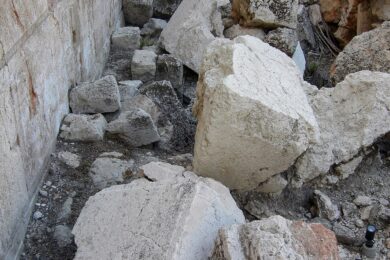
Micah set forth a third oracle bringing all of these themes together in Micah 3:9-12. He indicted the heads of the house of Jacob and rulers of the house of Israel as abhorring justice and perverting equity, building up Zion with blood and Jerusalem with iniquity (Micah 3:9-10). Judges took bribes, priests made determinations for profit, and prophets would give omens for pay; all of them would claim to trust how YHWH was in their midst and remained confident disaster would not overtake them (Micah 3:11). Micah of Moresheth then pronounced his dire warning which would ring in the ears of successive generations of Judahites: because of these authorities Zion would be plowed like a field, Jerusalem would become a heap of ruins, and the Temple Mount would become an overgrown hill (Micah 3:12).
Jerusalem was the City of David, the holy city; the Temple Mount, Mount Zion, featured the Temple of YHWH built by Solomon, where YHWH made His name to dwell by means of the Cloud of His Presence. The Temple, especially, was to be most holy. Micah of Moresheth, however, said it was built through blood and unjust violence. Perhaps there were some particularly galling forms of iniquity going on in Jerusalem at this time involving building projects enabled, facilitated, or even accomplished by means of extortion, oppression, and even bloodshed. Perhaps Micah has the long-term history of Jerusalem in mind with all the violence it had already experienced by the latter portion of the eighth century BCE. But everyone in places of authority were certainly in it for the money; Micah leaves us without any doubt about that. People who should be serving are extorting instead; they do not think twice about it, because YHWH is the God of Abraham, Isaac, and Jacob, YHWH delivered their ancestors from Egyptian slavery, YHWH gave them the land in which they dwell as an inheritance, and YHWH continues to dwells in Zion. They remained completely confident in the status quo: no disaster would overtake them.
The vast majority of Judahites would soon experience the kind of disaster Micah of Moresheth warned about when Sennacherib king of Assyria overran Judah in his campaign of 701 BCE. Micah’s homeland in the Shephelah would be thoroughly ravaged; its people would be killed or enslaved. Later Judahites believed Micah’s message in Micah 3:12 was a warning about this very destruction, with the expectation the Assyrians would make Jerusalem a heap of ruins and Zion a plowed field (cf. Jeremiah 26:18-19). At that time, Hezekiah cried out to YHWH in distress, and YHWH did not destroy them.
One might think someone would have learned a lesson from that close encounter with complete disaster. And, in fact, a “lesson” was learned, or taken from it: YHWH did not allow the Assyrians to destroy Jerusalem or Zion, and therefore YHWH would not allow anyone to destroy Jerusalem or Zion. Jeremiah, among many other prophets, would warn the Judahites against such a deadly and devastating distortion of the truth of the matter. Yet, in the end, it was all for nothing; the Babylonians besieged Jerusalem in 586 BCE, and YHWH did allow them to turn Jerusalem into a heap of ruins (cf. 2 Kings 25:1-21). For a couple of generations, at least, Judah and Jerusalem were profoundly depopulated. It might well have been possible to plow some land and grow some crops right in the middle of where the Temple once stood. If any vagabond Israelite did so, it would have provided an appropriate fulfillment of Micah of Moresheth’s prophecy.
The Word of YHWH through Micah of Moresheth in Micah 3:1-12 remains as relevant as ever. We may not be Israelites living in the Kingdom of Judah in the middle of the Iron Age, but we can see abundant evidence of rulers perverting what is true and right for unjust gain. We still have plenty of elites who manipulate the laws and systems in order to protect their wealth and enhance it at the expense of those who have far less than they. These very elites are often celebrated and honored by some who claim to proclaim the Gospel of Christ, and they hurl their invective against the constructed or perceived “other” in order to justify and perpetuate the systems which have enriched the wealthy and themselves. Almost everything built in our lands, from glittering skyscrapers to idyllic farms, are built upon land stolen from its original inhabitants and justified and upheld by a lot of violence and greed. Those who maintain the privilege and enjoy the benefits of these societal systems will claim their blessings are from God and presume no disaster will come upon them.
Only fools presume to know exactly what God will do, or allow to be done, in the future. As the people of God, however, we might do well take seriously the position of the elders of Jerusalem in the days of Jehoiakim king of Judah, remembering Micah’s message from Micah 3:12, and concerned they were about to bring great disaster upon themselves (Jeremiah 26:18-19). We would do well to consider ourselves, our conduct, and our words. Do we actually prove to hate what is good and revel in what is evil because it makes us good money and keeps us from poverty and loss? Do we benefit because of the exploitation and oppression of others? If so, our sin will find us out; some other group will come and do to us that which we have done to others, or we will have an uncomfortable time before the judgment seat of Christ.
Or will we be like Micah of Moresheth, confident in the witness God has provided in Christ through the Spirit, and maintain a strong commitment to justice and righteousness, and therefore prove willing to call out the injustice and sin pervasive around us, perhaps even among God’s people? It might not make us many friends, but that’s exactly what Jesus warned us about. May we stand firm for truth and righteousness and glorify God in Christ!
Ethan R. Longhenry